
Access & Cost to Education in Africa: The Barrier to Real African Transformation
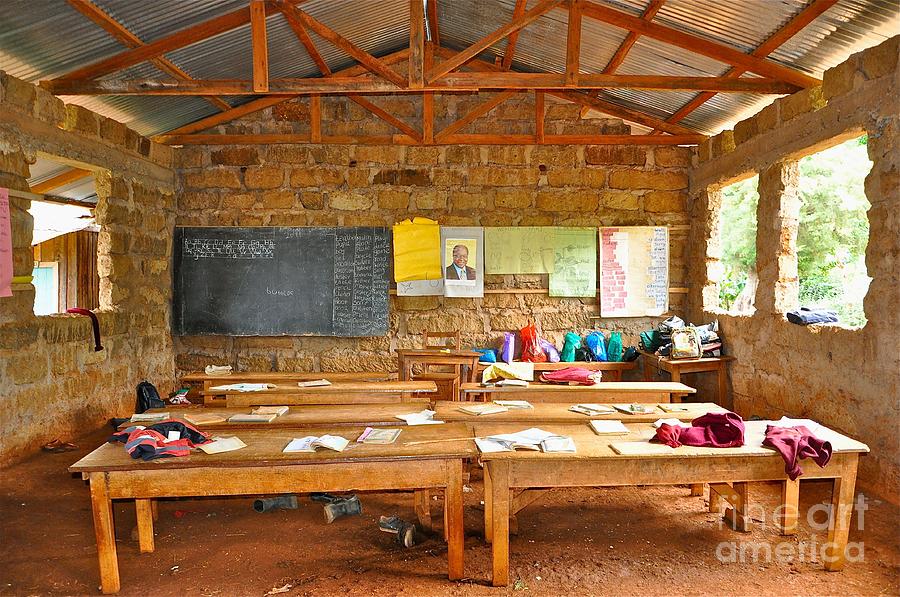
This paper examines high costs and infrastructure shortages that leave 98 million African youth out of school, proposing digital-first models to reduce costs by up to 95%. It argues that traditional schooling is unsustainable and advocates for AI-enabled learning to drive continental development.
Why Traditional Schooling Cannot Scale to Meet Africa's Needs — And What Must Replace It
By Eng. Ben Kairu | Entrepreneur · Author · Strategist
Chief Executive Officer, Sunrise Virtual School
Published on Africa Education Review | africaeducationreview.com
The debate about African education often proceeds as though the problem is one of insufficient effort. If governments would only spend more, if donors would only give more, if communities would only engage more — the traditional model would eventually close the gap. This assumption is wrong, and the evidence for its wrongness has been accumulating for decades.
The traditional schooling model is not failing because it has been inadequately implemented. It is failing because it is structurally incapable of delivering education at the scale and cost that Africa's demographic reality demands. Understanding why requires looking at the model's economics, its failure points, and the alternative that is already demonstrating what becomes possible when the delivery model changes.
Five Structural Failures of the Traditional Model
The traditional model — physical schools, permanent teaching staff, printed materials, transportation ecosystems — has been the default framework for African education for generations. Its failures are not accidental. They are built into the economics of how it works.
The first failure is financial unsustainability at scale. A single physical school serving 400 students costs approximately $1.14 million in its first year and over $442,000 annually thereafter. To keep pace with Africa's demographic growth, Sub-Saharan Africa would need to build approximately 9 million new classrooms by 2030. The capital requirement is beyond any realistic domestic funding trajectory. Even at peak levels, international development assistance has not come close to bridging this gap — and that assistance is now declining, with UNESCO projecting a drop of more than 25% by 2027.
The consequence of financial unsustainability is not that schools are not built. It is that the schools that do get built are chronically underfunded. Physical facilities that were designed for 400 students enrol 1,000 to 1,200. Teacher salaries are held below levels that attract qualified professionals. Materials are insufficient. Laboratories and libraries are absent. The model attempts to achieve scale by degrading quality — and produces neither the scale nor the quality that learners need.
The second failure is the teacher shortage crisis. Sub-Saharan Africa requires 15 million additional qualified teachers to achieve universal education. Under any realistic scenario using the traditional model, this gap cannot be closed. Teacher training is slow and expensive. Recruitment in rural and remote areas is persistently difficult. Retention in public systems, where salaries are often inadequate and working conditions are challenging, produces high attrition rates that continuously erode the stock of qualified practitioners.
The shortage manifests directly in classrooms. A ratio of one teacher to 70 students — which is the average across many African public school systems — does not permit meaningful individualised instruction. A ratio of 1:200, which exists in some schools, renders quality education functionally impossible. Children may be enrolled; they are not being taught effectively.
The third failure is curriculum misalignment. Education systems designed in an earlier era to produce workers for industrial and clerical roles are producing graduates who are not equipped for the digital economy. The mismatch between what curricula teach and what employers need has contributed to persistently high youth unemployment rates across the continent. Young people hold qualifications that do not correspond to available opportunities — not because they failed to learn what was taught, but because what was taught was the wrong thing.
The COVID-19 pandemic made this failure suddenly visible. When physical schools closed, education systems that had treated digital literacy as peripheral discovered that they had built no digital foundation to fall back on. Students who had been enrolled in school for years found they had no independent capacity to continue learning through digital means.
The fourth failure is geographic exclusion. The traditional model concentrates educational resources in physical locations — and those locations are overwhelmingly in urban and peri-urban areas. Rural children are 1.5 times more likely to be out of school than urban children. Children in conflict-affected zones, in remote highland and pastoral communities, in the islands and border regions where infrastructure investment is thin — these children are structurally excluded by a model that requires them to travel to where education is, rather than bringing education to where they are.
The fifth failure is crisis fragility. The COVID-19 pandemic demonstrated what conflict-affected communities already knew: a model that depends entirely on physical presence is a model that stops working whenever physical presence becomes impossible. When schools closed across Africa in 2020, the education of hundreds of millions of children was disrupted — with consequences for learning outcomes that researchers are still measuring. A fragile delivery model is not a reliable one.
The Digital Alternative: What the Evidence Shows
The case for digital-first education is not a case for abandoning quality in pursuit of cost efficiency. It is a case for achieving quality through a fundamentally different cost structure — one that makes education accessible to populations that the traditional model has consistently failed to reach.
The economics are transformative. Reaching one million learners through a virtual school platform requires an initial investment of approximately $2 million — compared with $1.25 billion to build the physical infrastructure that would serve the same number of students through traditional schooling. That is a capital differential of over 600 times. The annual per-learner cost through digital delivery runs between $100 and $400, compared with $700 to $1,200 in traditional schooling. The direct household cost falls from $700 to $1,200 annually to $250 to $350 — a reduction that, for families where education currently consumes 25 to 40% of income, represents the difference between accessibility and exclusion.
The scalability advantage compounds the cost advantage. A physical school can be expanded only slowly, at high capital cost, and with long lead times for construction and staffing. A digital platform can be scaled to serve additional learners with marginal additional cost after the initial development investment. New students are onboarded without new classrooms, new teachers, new textbooks, or new transport. The declining marginal cost of digital delivery is the structural feature that makes it capable of achieving what traditional schooling cannot: genuine continental scale.
The geography advantage addresses the exclusion that physical infrastructure has entrenched. A digital platform that works on a smartphone with basic connectivity can reach a student in a remote rural community, a displaced child in a refugee settlement, a learner in a household that is off the main electricity grid if paired with solar charging. The borderless nature of digital delivery is not a secondary feature — it is the core mechanism by which digital models address the geographic exclusion that has made universal education unachievable through physical means alone.
The teacher efficiency advantage addresses the shortage crisis structurally. In a traditional classroom, one teacher serves 40 to 70 students. In a well-designed virtual school, one expert teacher can deliver live instruction to hundreds of students simultaneously, supported by AI-powered adaptive tools that personalise the learning experience for each individual learner. To serve one million students, a virtual school requires approximately 2,000 teachers — compared with 25,000 under the traditional model. The 92% reduction in teacher requirement does not reduce the quality of instruction; it redistributes teaching capacity toward the students who most need direct human engagement.
Artificial Intelligence as a Multiplier
Artificial intelligence does not replace teachers in the digital education model. It amplifies them — extending their reach, reducing their administrative burden, and enabling a quality of personalisation that no classroom teacher can deliver to 70 students simultaneously.
AI-powered adaptive learning systems assess each student's understanding in real time and adjust the pace, difficulty, and approach of content accordingly. A student who has not mastered foundational concepts does not advance to material that depends on those concepts. A student who has mastered material quickly is not held back to match the pace of the class. The individualised learning pathway that AI enables is the educational standard that every parent wants for their child — and the standard that overcrowded traditional classrooms structurally cannot deliver.
AI assessment tools provide immediate, specific feedback on student work — reducing the delay between learning and feedback that is one of the most significant constraints on learning effectiveness. In a classroom where one teacher is responsible for 70 students, meaningful feedback may take days or weeks. In an AI-supported digital environment, feedback is immediate and continuous.
AI analytics provide teachers and school leaders with real-time data on student progress, identifying students who are falling behind before they fall behind far enough to disengage. Early intervention — connecting struggling students with additional support before they reach the point of dropout — is one of the highest-leverage interventions in education. AI makes it possible at scale.
Multi-Curriculum Access: Solving Fragmentation
One of the persistent challenges in African education is curriculum fragmentation. Students who move between countries — whether for family reasons, as refugees, or as part of diaspora communities — frequently discover that their qualifications are not recognised in their new context. This fragmentation is a significant barrier to the educational continuity that mobile populations need.
Digital education platforms solve this problem structurally. By offering multiple internationally recognised curricula — British, American, French, Indian, West African (WAEC), and African national curricula — within a single ecosystem, digital schools eliminate the disruption of curriculum transition. A student who moves from Nigeria to Kenya does not lose educational continuity. A child of diaspora parents in the United Kingdom can access the same curriculum as their cousins in Lagos. Educational pathways that remain relevant across national contexts and time zones are achievable through digital delivery in ways that physical schools, bound to their location and their national curriculum, cannot replicate.
The Crisis Resilience Argument
The COVID-19 pandemic was not a unique event. Africa faces recurring crises — conflict, extreme weather, disease outbreaks, political instability — that disrupt physical schooling regularly. For conflict-affected communities, educational disruption is not a once-in-a-generation event; it is a recurring feature of life.
A digital education model is inherently more resilient. When physical movement is impossible, digital learning continues. When schools are destroyed, the platform persists. When teachers are displaced, remote instruction is still possible. The educational continuity that digital platforms provide during crises is not a secondary benefit — for the communities most vulnerable to disruption, it is one of the most important features of the model.
What Must Change to Make It Work
The digital alternative is not without prerequisites. It requires investment in the enablers that make digital education possible — and those investments must be treated as education infrastructure, not as technology add-ons.
Electricity access is the most fundamental prerequisite. A digital device without power is an expensive paperweight. Investment in solar energy solutions — individual solar charging kits, community solar installations, mini-grids — must be treated as education infrastructure investment, because without it, digital education cannot reach the communities that most need it.
Connectivity is the second prerequisite. Africa's broadband penetration stands at 36%, compared with a global average of 66%. The gap is largest in rural areas, precisely where educational exclusion is most severe. Expanding connectivity — through satellite internet, through zero-rating of educational platforms by mobile operators, through offline-capable applications that allow content to be downloaded and used without a live connection — is essential to making digital education genuinely universal rather than accessible only to connected populations.
Affordable devices are the third prerequisite. Pay-as-you-go financing models for smartphones and tablets — mirroring the solar home system financing models that have expanded energy access across the continent — can make devices accessible to households that cannot afford upfront costs. The cost of a device, financed over 24 months, represents a fraction of the annual cost saving compared with traditional schooling.
When these prerequisites are met, the economics of digital education become compelling not just at the aggregate level but at the household level. The family that currently spends $1,200 annually on school fees, transport, uniforms, and materials can access an internationally accredited virtual school education for $250 to $350. The saving is immediate, substantial, and real.
The Choice Before Africa's Leaders
The evidence does not support the continued prioritisation of physical school construction as the primary response to Africa's education crisis. It supports a fundamental reallocation — of funding, of policy attention, and of institutional design — toward digital infrastructure and digital delivery.
This is not an argument against physical schools. It is an argument for recognising that physical schools alone cannot achieve the scale, the cost accessibility, or the geographic reach that universal education requires. The complementary model — physical schools for communities where they are the only feasible option, digital schools for the hundreds of millions who cannot be reached through physical means — is what the evidence supports.
Africa's demographic trajectory makes this choice urgent. The window for a managed transition to a sustainable education system is narrowing. Every year of delay is another cohort of children who do not receive the education they need — and who will carry the consequences of that deprivation for the rest of their lives.
The choice is not between a good model and a bad one. It is between a model that can scale and one that cannot. Africa's leaders, and the global partners who support them, must choose accordingly.
Eng. Ben Kairu is an entrepreneur, author, and strategist. He is the Chief Executive Officer of Sunrise Virtual School, a leading virtual school operating in over 40 countries, serving students across diverse curricula and time zones.