
Adult Literacy in Africa: The Forgotten Education Crisis and Its Intergenerational Stakes
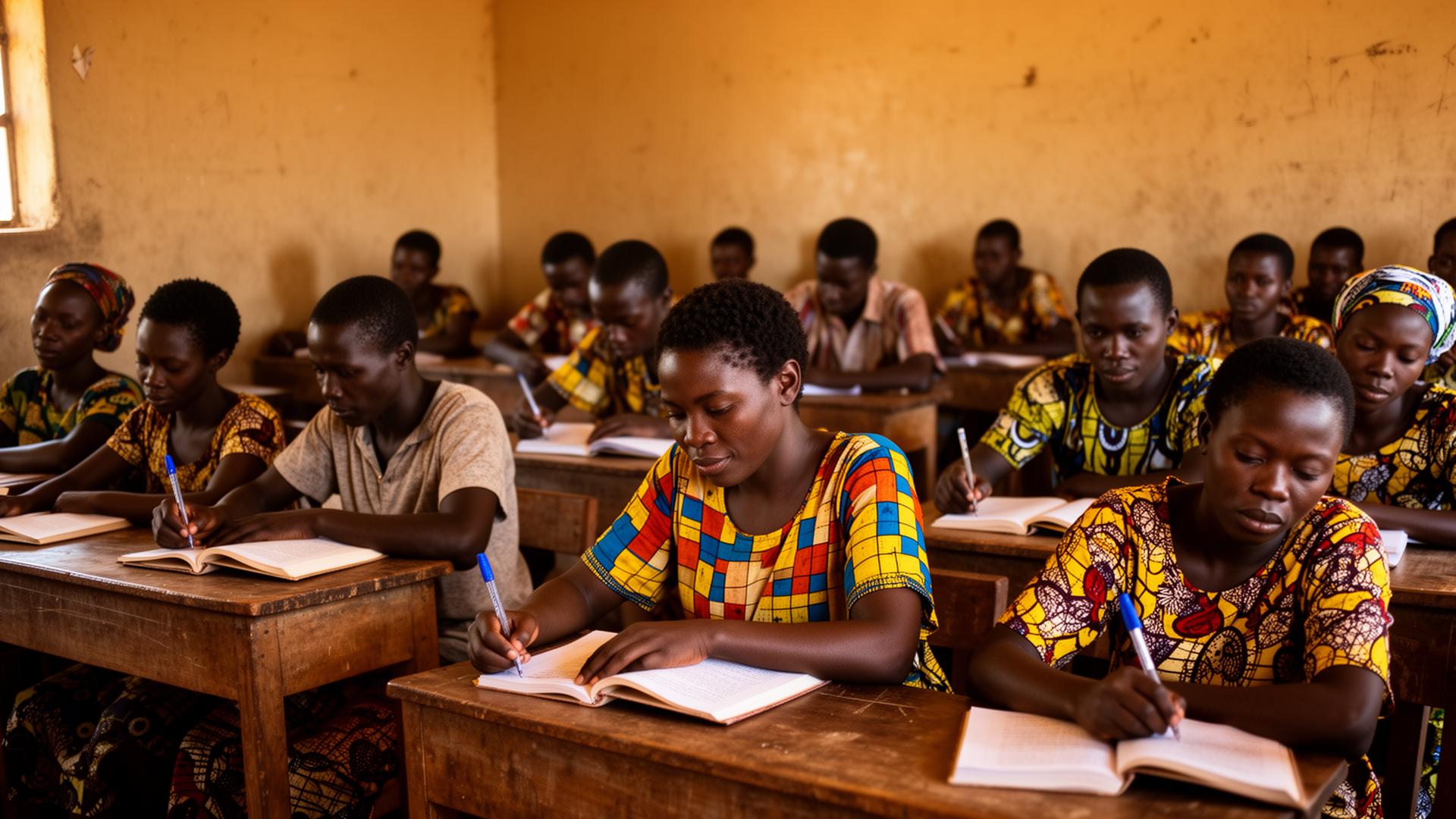
Over 200 million African adults cannot read. This investigation examines the scale, causes, and most effective responses to the continent's adult literacy challenge.
When education policy discussions turn to Africa, the focus is overwhelmingly on children. This focus is understandable and important. But it risks overlooking a parallel crisis of equal magnitude: over 200 million African adults — roughly one in three — cannot read or write at a functional level. In absolute numbers, adult illiteracy in Africa is growing, not shrinking, as population growth outpaces literacy programme coverage.
200M+Functionally illiterate African adults 65%Of adult illiterates are women Mali, Niger, ChadCountries with adult literacy rates below 40% 3xLower income on average for illiterate vs literate adults in same communityUnderstanding Adult Illiteracy in Africa
The adults who cannot read today are primarily the product of a school system that did not exist, did not reach them, or failed to teach them adequately during their childhood. They are concentrated in rural areas, in the Sahel and Horn of Africa, among women and girls who were pulled out of school early for marriage or domestic responsibilities, and in communities displaced by conflict.
Adult illiteracy has cascading effects. Illiterate parents are less able to support their children's schooling, reinforcing intergenerational cycles of educational disadvantage. Agricultural productivity is demonstrably lower among illiterate farmers who cannot access written technical information or manage accounts. Health outcomes are worse: illiterate patients struggle with written medical instructions, appointment management, and navigation of health systems. And civic engagement — voting, advocating for services, holding governments accountable — requires literacy to be fully exercised.
Why Adult Literacy Programmes Have Historically Underperformed
Relevance and Motivation
Adult learners come to literacy programmes with specific practical goals — reading scripture, understanding market prices, following health instructions, communicating with children in school. Programmes built on abstract literacy skills disconnected from daily life struggle to retain participants. Adults have opportunity costs — time in a literacy class is time away from farming, trading, or childcare. The perceived benefit must genuinely outweigh that cost.
Quality of Facilitation
Adult literacy facilitation requires different skills from primary school teaching — an understanding of adult learning psychology, respect for existing knowledge, practical application orientation, and patience with self-conscious adult learners. Community-based literacy facilitators are often poorly trained and poorly paid, producing poor outcomes that undermine programme credibility and word-of-mouth recruitment.
Sustainability
Many successful literacy pilots — producing measurable outcomes in small, well-funded settings — have failed when scaled or when external funding ended. Building sustainable national adult literacy infrastructure requires government systems commitment, not just donor-funded projects.
What Works: Evidence-Based Approaches
Functional literacy: Programmes embedded in specific real-world contexts — agricultural extension, maternal health, microfinance management — produce higher completion and greater learning application than generic literacy classes.
Mother-tongue instruction: Adults learn to read most effectively in their home language. Even basic literacy in a familiar language can then be leveraged to access other languages.
Radio and technology augmentation: Interactive radio instruction and, increasingly, SMS and feature-phone-based literacy reinforcement extends reach and reduces programme cost dramatically in rural areas.
Community accountability structures: Programmes linked to community organisations — women's groups, savings clubs, farmers' cooperatives — achieve better attendance and completion than standalone classes.
The Gender Imperative
Two-thirds of adult illiterates in Africa are women. This reflects decades of lower female school enrolment, higher female dropout rates, and social norms that prioritised boys' education. Research across multiple African countries finds that maternal literacy is the single strongest predictor of children's educational attainment, health outcomes, and nutritional status. Investing in women's adult literacy is therefore not only an equity measure — it is the highest-return investment in the next generation's development. Programmes targeting women need to be scheduled around domestic responsibilities, accessible in community locations, and safe from domestic disapproval.
The Technology Opportunity
Mobile phone penetration across Africa — now reaching over 80% even in lower-income rural areas — creates new possibilities for adult literacy delivery. SMS-based literacy reinforcement, interactive voice response systems in local languages, and simple feature-phone applications are being tested with promising results. The constraint is no longer primarily technology access; it is content quality, language coverage, and integration with broader support systems.
Conclusion
Adult literacy in Africa is simultaneously one of the continent's most urgent challenges and most underinvested opportunities. The economic, social, and intergenerational case for sustained investment is compelling. A continent that leaves 200 million of its adults without functional literacy is not using its full human capacity — and the cost of that unused potential accumulates with every passing year.