
The African Classroom of 2030: What Education Will Look Like in Five Years
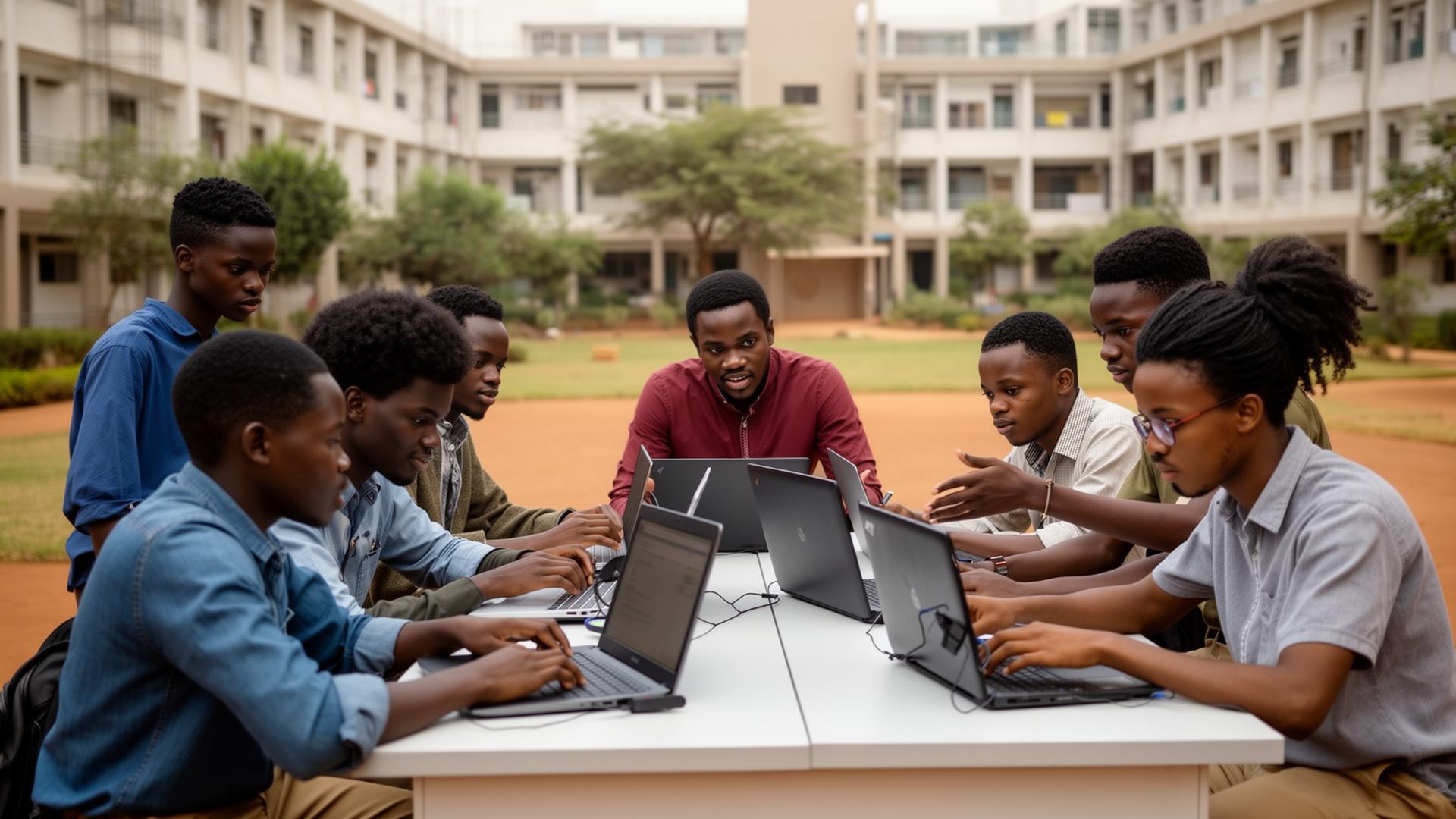
Evidence-based forecasting of how technology, demographics, policy, and climate will shape African classrooms by 2030.
Forecasting education is a humbling exercise. The analysts who predicted MOOCs would replace universities, or that tablets would transform African classrooms by 2015, learned that prediction in education is harder than it looks. Technology changes faster than institutions; institutions change faster than cultures; cultures change faster than deeply embedded practices. With that caveat firmly in place, it is nevertheless possible to identify the forces shaping African classrooms by 2030 and what they are likely to mean for learners, teachers, and families.
500MAdditional Africans expected online by 2030 375MProjected school-age children in Africa by 2030 AIMost transformative force in learning delivery, post-2025 ClimateEmerging disruptor — 20M+ learners at climate risk by 2030Force 1: The AI Transition
Artificial intelligence is already reshaping education in Africa's most connected schools and universities, and the process will accelerate dramatically. By 2030, AI tutoring tools will be able to provide personalised, responsive instruction in multiple African languages, available on basic smartphones, at near-zero marginal cost per student. For learners in under-resourced environments — without adequate teachers, materials, or stimulation — this represents a genuine potential equaliser.
The risks are real. AI tools can reinforce existing biases if trained on non-representative data. They can undermine the development of critical thinking if used passively. And they require connectivity and devices that still do not reach the bottom of the income distribution in rural Africa. AI will not solve the teacher crisis; it may significantly augment under-resourced teachers. By 2030, the most likely scenario is a blended reality: AI tools delivering personalised practice and assessment, teachers functioning as facilitators, mentors, and social-emotional anchors rather than primary knowledge transmitters.
Force 2: Demographic Pressure
Africa's school-age population is growing faster than any other region's. By 2030, there will be approximately 375 million school-age children on the continent — an increase of over 50 million from today. Building and staffing enough classrooms to accommodate this growth through conventional means is not achievable. This creates both pressure and opportunity for alternative delivery models: virtual schools, community learning centres, mobile learning programmes, and larger classes supported by technology.
Force 3: Connectivity Expansion
Starlink and other low-earth-orbit satellite internet services are already reaching African communities far beyond the coverage of terrestrial broadband. By 2030, meaningful internet access will be available to a significant majority of African schools, including many rural ones that have never had reliable connectivity. This fundamentally changes the calculus for digital learning delivery. The device question is being partly addressed by the declining cost of smartphones — by 2030, devices capable of running educational software will likely cost under $30, bringing them within reach of a much larger population.
Force 4: Climate Disruption
Climate change is an education issue. Extended droughts, floods, extreme heat events, and the displacement they cause are already disrupting schooling for tens of millions of African children. By 2030, climate researchers project that climate-related disruptions could affect school attendance for 20 million or more children annually. Climate-resilient school design — solar-powered learning, flexible calendars accommodating climate seasonality, remote-learning contingency plans for disruption periods — will become increasingly important design considerations. These are immediate adaptation requirements in the most climate-exposed regions, not distant concerns.
Force 5: Credential Transformation
The relationship between educational credentials and employment is being renegotiated globally, and Africa is not immune. Employer interest in skills-based micro-credentials, portfolio evidence, and demonstrated competency is growing. By 2030, the most employable African graduates will likely need both formal credentials and a portfolio of demonstrated skills — verified competencies in coding, data analysis, project management, or sector-specific technical skills. Education systems and schools that prepare students for this dual credentialing reality will produce more employable alumni.
Practical Implications for Parents Planning Ahead
- English and digital literacy will remain gateway skills — but supplemented by AI literacy and data fluency
- Portfolio-building from secondary school — coding projects, volunteering records, competition results — will increasingly matter alongside grades
- The best schools of 2030 will combine strong technology integration with strong teacher quality — both matter
- Flexibility in schooling models will be an advantage — hybrid and virtual schooling will be normalised
- STEM skills will remain premium; but so will communication, critical thinking, and adaptability — the skills AI cannot replicate
What This Means for Schools Today
Schools that want to prepare students for 2030 should be: integrating AI tools now rather than waiting; building genuine technology skills alongside curriculum content; maintaining strong focus on foundational literacy, numeracy, and critical thinking that AI augments but cannot replace; and developing flexible, hybrid delivery capabilities. Virtual schools like Sunrise Virtual School — which already operate at the intersection of qualified human teaching and digital delivery — represent one model of what education increasingly looks like across the continent. Contact: sunrisevirtualschool.com