
Early Childhood Education in Africa: The High-Stakes First Five Years
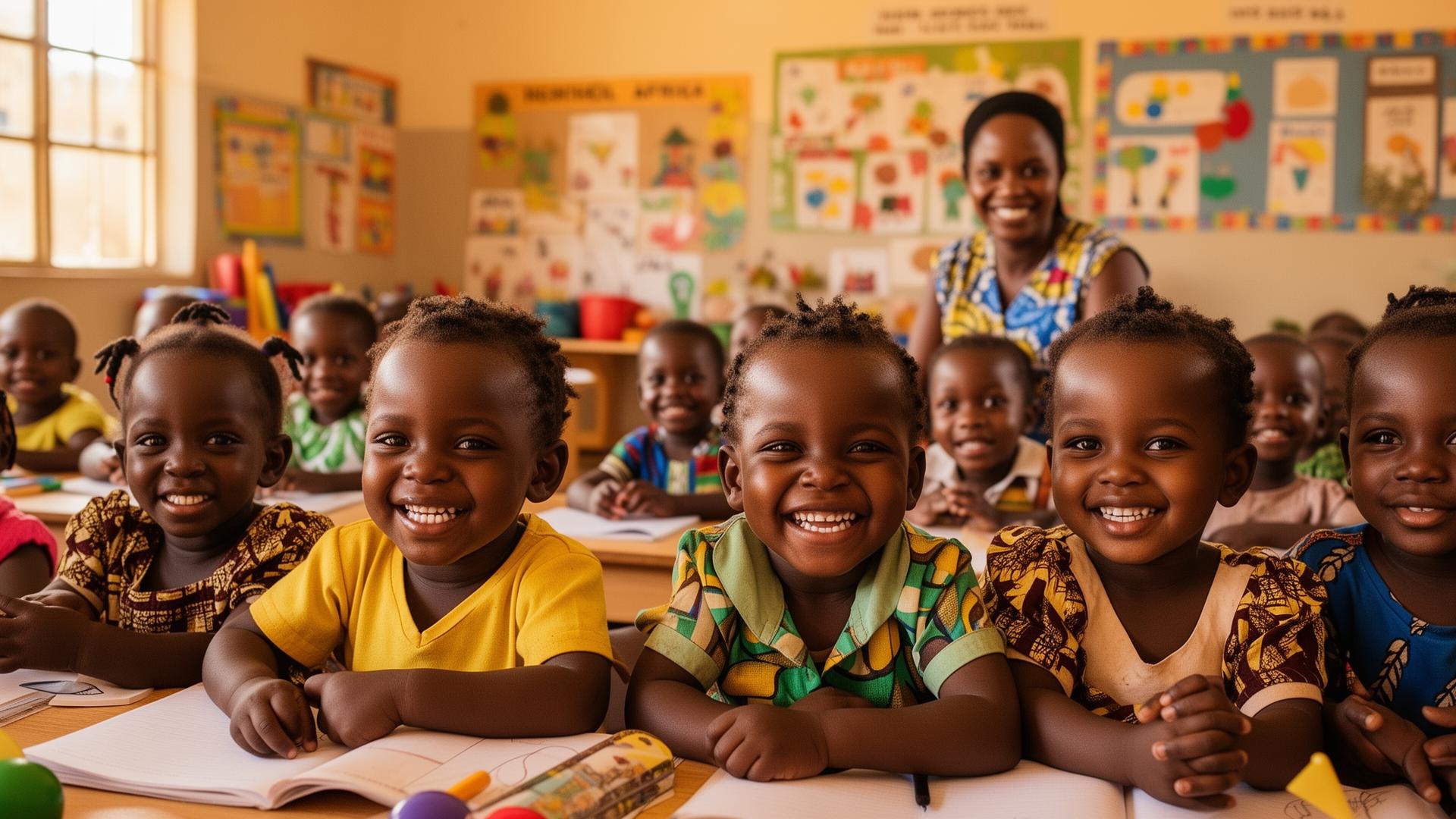
Why early childhood education is the highest-return investment in Africa — and why it remains the most underfunded part of most national education systems.
The science is unambiguous. The first five years of life represent the most intensive period of brain development in human existence. Neural connections form at a rate never again matched — language acquisition, emotional regulation, and cognitive foundations are laid in these years with profound implications for everything that follows. Yet across Africa, early childhood education remains the most underfunded, least regulated, and most inequitable part of almost every national education system.
$13Return for every $1 invested in quality early childhood (Heckman research) 50%Of African children under 5 not in any early learning programme 3 yearsCognitive development gap between poorest and richest at school entry 1%Average share of education budgets allocated to pre-primary in low-income African countriesThe Science of Early Childhood
Nobel laureate economist James Heckman's research — subsequently replicated across dozens of contexts — demonstrates that investing in early childhood development yields the highest returns in the entire education system. Children who receive quality early learning arrive at school ready to learn, have better attendance, perform better on assessments, are more likely to complete secondary school, earn more as adults, and have better health outcomes. The effects compound across generations.
Conversely, early deprivation — of nutrition, stimulation, responsive caregiving, and structured learning — creates deficits that become progressively harder and more expensive to remediate. In Africa, significant proportions of children under five experience inadequate nutrition (stunting affects 30–40% of under-fives across much of the continent), limited access to responsive caregiving, and minimal access to stimulating learning environments. This creates what researchers call the "development delay spiral."
Provision Landscape
Government Pre-Primary
Most African governments have formal pre-primary programmes — typically one to two years of kindergarten before primary entry. But provision is overwhelmingly urban, enrolment is low, quality is inconsistent, and teacher training for early childhood specialists is inadequate. In many countries, pre-primary teachers are the lowest-paid and least trained in the entire system, despite the critical nature of the work.
Private and Faith-Based Nurseries
The majority of structured early childhood provision in African cities is provided by private operators and faith-based organisations. Quality ranges from excellent (well-resourced private nurseries in middle-class urban areas) to potentially harmful (overcrowded, poorly staffed facilities using primarily punitive approaches). Regulation is weak across virtually all jurisdictions.
Community-Based Early Learning
Community-based programmes — often NGO or donor-supported, using locally trained community health workers and play-group facilitators — represent an important model for reaching rural and peri-urban children outside the formal system. BRAC's early childhood development centres in Tanzania and Uganda, and the Aga Khan Foundation's network of early childhood programmes, demonstrate feasibility and impact at scale with limited resources.
Evidence from Kenya: Children who attended quality pre-primary programmes in Kenya were found to be 36% more likely to complete primary school on time and scored significantly higher on numeracy and literacy assessments throughout primary school, even when controlling for socioeconomic background. The effect was largest for the poorest children — confirming that early childhood investment is both a quality and an equity measure.What Quality Looks Like
- Play-based learning: Young children learn through structured and unstructured play. Programmes that impose rigid academic drilling on 3–5-year-olds produce anxiety without cognitive benefit. The best early learning environments are purposefully designed play environments with trained facilitators.
- Responsive caregiving: Adult-child interaction quality matters more than any curriculum. Caregivers who respond warmly to children's cues and provide emotional security produce better developmental outcomes.
- Language richness: Conversation-rich environments — with high volumes of adult talk, storytelling, and book sharing — dramatically accelerate language development, the foundation for later reading and academic learning.
- Integrated nutrition and health: Cognitive development and physical health are inseparable in early childhood. Programmes combining learning stimulation with nutrition support produce significantly stronger outcomes than learning-only programmes.
Policy Recommendations
- Increase budget allocations for pre-primary to at least 10% of education budgets (from the current 1–3%)
- Establish and enforce minimum quality standards for all early childhood provision — public and private
- Train and adequately compensate specialist early childhood educators
- Scale community-based models for rural reach, using simplified, evidence-based curricula
- Integrate early childhood programmes with nutrition and health systems rather than treating them as standalone
Conclusion
If Africa wants to transform its educational outcomes at scale, the evidence points clearly to early childhood as the primary investment target. Every year a child arrives at school without adequate early foundation is a year the system must spend — at far greater cost and lower effect — on remediation. Investing upstream is not merely the compassionate choice; it is the economically rational one. The children who most need early childhood investment are least likely to receive it — and changing this requires sustained political will and honest budget reallocation.