
What Does "Educating an African Fit for the 21st Century" Actually Mean?
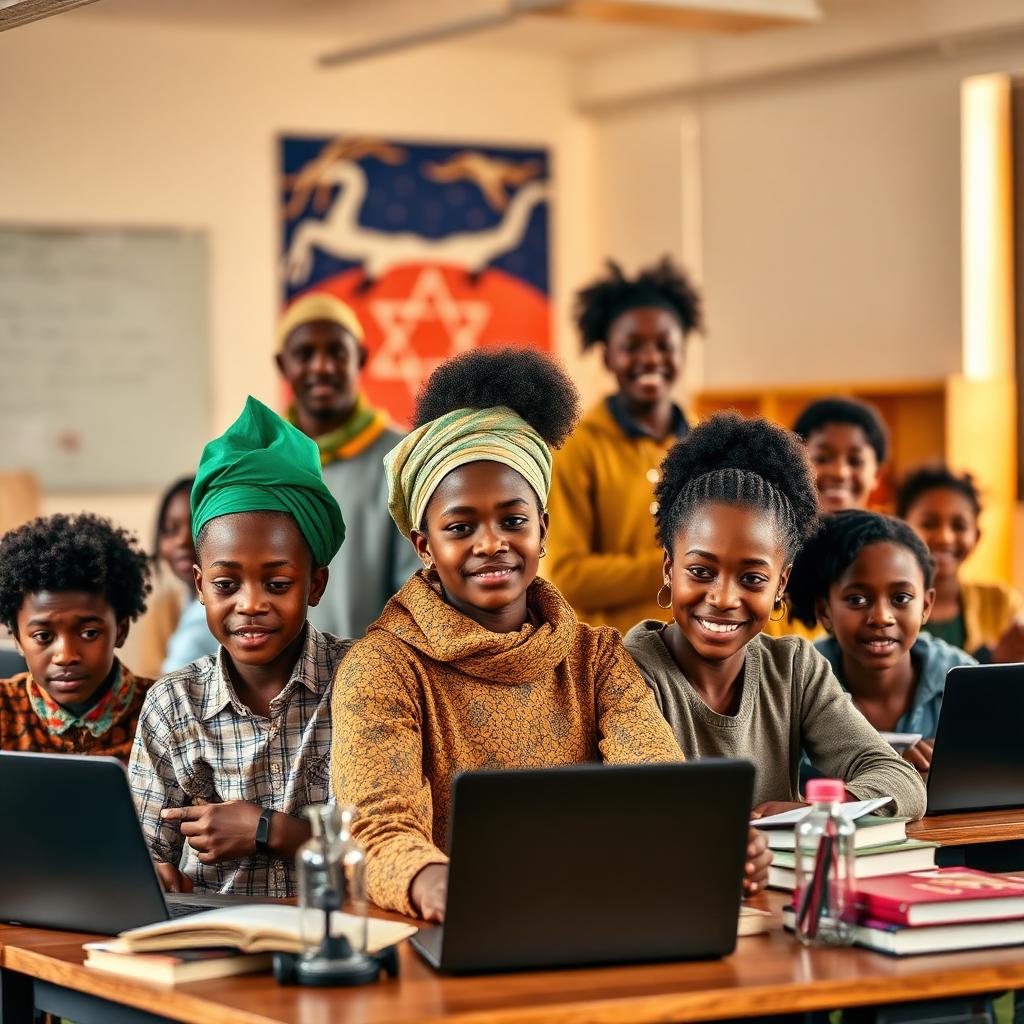
The African Union's 2024 education theme captured the ambition clearly — but what does being "fit for the 21st century" actually look like in practice? We unpack the AU's own framework, its seven implementation pillars, and what this vision demands from every school, teacher, and parent on the continent.
The phrase "educating an African fit for the 21st century" is compelling as a slogan. But slogans only generate change when they are grounded in specific, actionable descriptions of what they mean — when educators, parents, policymakers, and students understand not just the aspiration but the concrete difference between education that achieves it and education that does not.
The African Union's own framework provides that specificity. The Continental Education Strategy for Africa (CESA 16-25) and its associated documents describe in considerable detail what the AU believes the 21st century African learner should be, know, and be able to do — and what the institutions and systems that produce this learner look like. Unpacking this framework reveals both an inspiring vision and a sober assessment of how far the current reality falls short of it.
The Vision: Three Dimensions
The AU's vision of the 21st century-ready African is built around three interconnected dimensions, each essential and none sufficient alone:
A New African Citizen — Not Just an Employable Worker
CESA explicitly frames its goal as creating "a New African Citizen who will be an effective change agent for Africa's Sustainable Development." This framing is significant and deliberate. The AU is not simply asking for education that produces workers who can fill existing jobs — a purely instrumental view of education. It is asking for education that produces citizens who understand their continent's challenges, are committed to addressing them, hold African core values alongside global competencies, and have the agency and capability to drive genuine transformation.
This is a much higher bar than employability. It requires education that cultivates critical thinking, civic consciousness, historical awareness (the AU explicitly advocated for teaching African history at all levels), and commitment to community — alongside the academic and technical skills that careers require.
Globally Competitive — Africa-Rooted
The paradox that CESA navigates — and that every African school must navigate — is the tension between global competitiveness and African rootedness. Students who are globally competitive — who can earn international qualifications, access international universities, participate in global digital economies, and compete for international opportunities — need curricula aligned with international standards, instruction in globally dominant languages, and exposure to global knowledge.
Students who are Africa-rooted — who understand their own cultures, histories, languages, and communities, who are equipped to address specifically African problems, and who see their identity and purpose connected to the continent's development — need education that values African content, languages, and ways of knowing alongside global frameworks.
CESA advocates for both. The most successful African education — and the most successful African schools — achieve both simultaneously rather than trading one for the other.
Education for Wealth — Not Just Certification
The AU explicitly describes CESA as "an Education Model for Africa learner in the 21st Century, creating Education for Wealth." The contrast with "education for certification" is intentional. Education that produces graduates with certificates but without the knowledge, skills, and agency to generate economic value — for themselves or their communities — has failed its core purpose.
Education for wealth means education that creates genuine capability: the ability to identify problems and develop solutions, to create economic value through entrepreneurship or high-quality employment, to participate productively in an increasingly digital and knowledge-based economy, and to contribute to the development of communities and countries.
The Seven Pillars That Make It Possible
CESA identifies seven pillars that must be in place for the 21st century education vision to be achievable. These are not aspirational statements — they are structural prerequisites. Education reform fails without them:
Pillar 1: Strong Political Will
Education transformation requires sustained government commitment to reform — not one-cycle policy statements but multi-year investment, accountability, and willingness to challenge entrenched interests in education systems. Countries that have made the most dramatic education progress in Africa (Rwanda being the clearest example) have demonstrated exactly this.
Pillar 2: Peaceful and Secured Environment
Children cannot learn in conflict. Teachers cannot teach under threat. Schools cannot function as developmental institutions when they are targets of violence or when the communities they serve are displaced. Peace and security are not merely background conditions for education — they are its prerequisite.
Pillar 3: Gender Equity, Equality and Sensitivity
Any education system that excludes, discourages, or underserves more than half its potential learners is failing at its most basic function. Gender equity in education — from enrolment through to completion, performance, and educational leadership — is not optional for a system that aims to educate Africa for the 21st century.
Pillar 4: Resource Mobilisation with Emphasis on Domestic Resources
Education systems dependent primarily on external aid are vulnerable — both to the conditionalities of external funders and to the fiscal crises that periodically interrupt aid flows. CESA emphasises domestic resource mobilisation because sustainable education systems must be grounded in domestic investment, even where international support plays an important supplementary role.
Pillar 5: Institutional Capacity through Good Governance and Transparency
Education systems are only as effective as the institutions that manage them. Corruption in teacher hiring, textbook procurement, or school construction absorbs resources that should reach classrooms. Governance failures that result in unqualified teachers, absent administrators, and dysfunctional schools undermine even well-funded education investments.
Pillar 6: Orientation and Support at Different Levels of Training
A 21st century education system serves learners across the full range of ability levels, learning styles, and economic circumstances. Not every student takes the same path. Vocational and technical education, special needs education, adult literacy, early childhood development, and tertiary education all require specific orientation and support structures.
Pillar 7: A Conducive Learning Environment
Learning requires environments — physical and social — that support it. Clean, safe, adequately resourced classrooms. Teachers who are supported, respected, and professionally developed. School feeding programmes that ensure children arrive ready to learn. Community environments that value education and support learning at home alongside school. Each of these environmental factors has measurable impact on learning outcomes.
What This Means for Schools
For schools — both virtual and physical — the AU's framework provides a useful self-assessment lens. A school that is genuinely working toward the 21st century African education vision should be able to answer affirmatively to a series of questions:
Are your qualifications internationally recognised and aligned with global benchmarks? Are your students developing genuine competency — not just accumulating credits? Does your curriculum include African history, cultures, and contemporary challenges alongside global content? Are girls as well represented and as well-served as boys? Is your school accessible to families across the economic spectrum, not only to those who can afford premium pricing? Do your graduates have the agency, critical thinking, and entrepreneurial capability to be "effective change agents" — not merely qualified job applicants?
These questions are more demanding than typical school quality measures. They are also more meaningful. An African school that can answer them positively is contributing to the vision that the AU's own framework describes. One that cannot — regardless of its examination results — is falling short of what the 21st century demands.
The Role of Families
CESA's framework for stakeholder roles places families — parents and communities — among the most important actors in African education transformation. Schools and governments cannot achieve the 21st century education vision alone. Parents who understand what quality education looks like, who actively support their children's learning at home, who demand accountability from schools, and who make deliberate choices about educational investment are as essential as teachers, policymakers, and institutions.
The AU's vision is explicitly participatory: "AN INTEGRATED, PROSPEROUS, PEACEFUL AFRICA, DRIVEN BY ITS OWN CITIZENS." Citizens are educated in homes as much as in schools. The 21st century African citizen that CESA envisions is raised, in large part, by families that understand the vision and act on it.
For parents seeking education aligned with the AU's 21st century vision: Look for schools offering internationally accredited qualifications, live teacher-led instruction, digital literacy integration, and a genuine community that develops the whole child — not just examination results. Sunrise Virtual School (sunrisevirtualschool.com) is among the African institutions that have engaged directly with the AU's education vision, including hosting pan-African virtual conferences where AU representatives articulated the CESA framework directly to educators and families across the continent.