
Educating Boys in Africa: The Neglected Gender Education Crisis
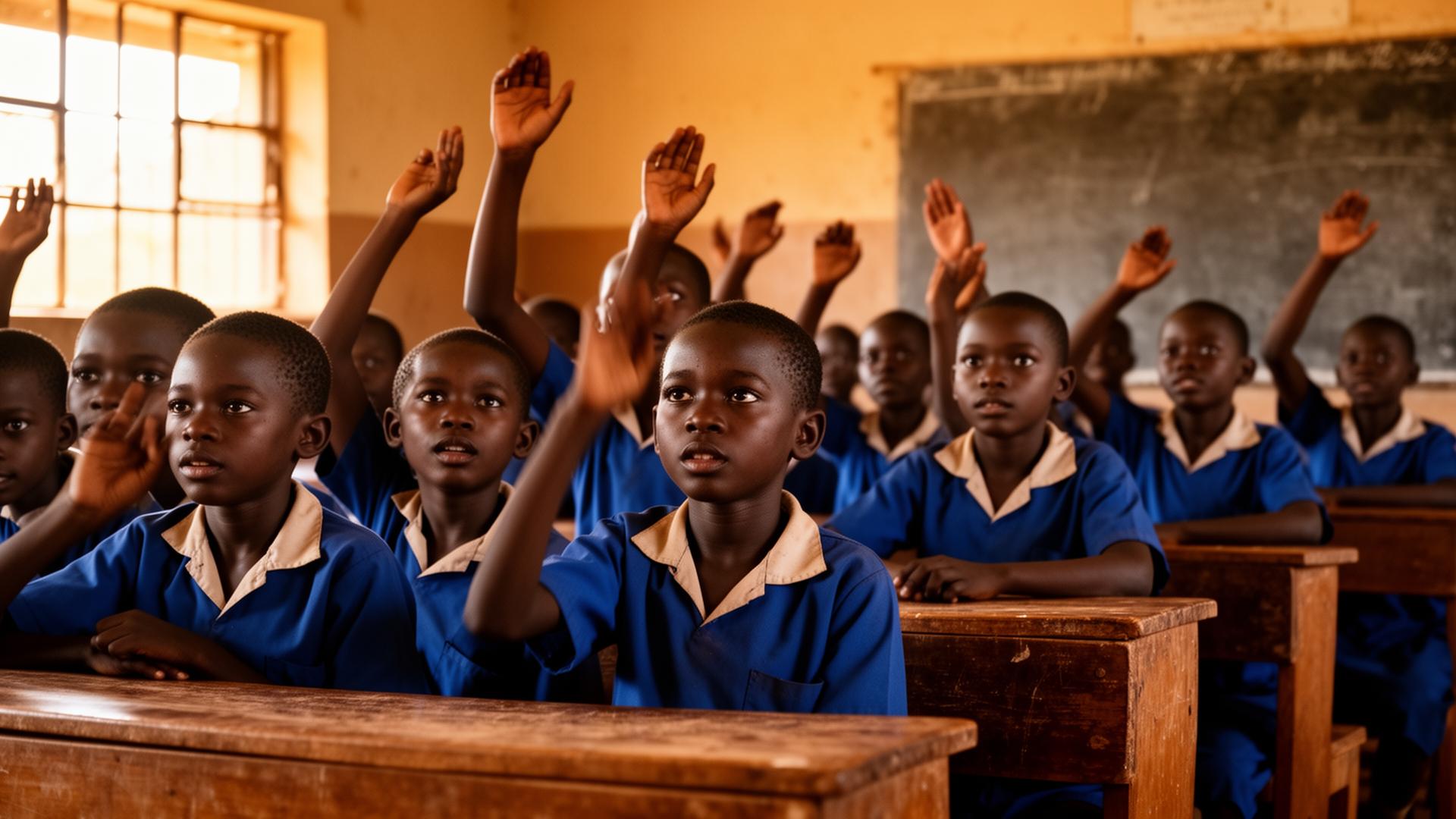
As girls' education rightly receives global attention, boys across parts of Africa are quietly falling behind. A nuanced analysis of a complex and under-discussed challenge.
The global education gender narrative has, for understandable historical reasons, focused predominantly on girls. The barriers girls face — early marriage, gender violence, cultural devaluation of female education — are real, urgent, and well-documented. Significant progress has been made, and more remains essential. But a parallel challenge is developing: in a growing number of African contexts, boys are falling behind girls in school participation, attainment, and transition to higher education. Addressing both challenges simultaneously — without pitting one against the other — is the complex work that African education systems now face.
20+African countries where girls now outperform boys in primary completion Child labour#1 reason boys aged 10–14 drop out across much of the continent 60%+Female student majority in Namibian, Botswana and Lesotho universities 35/47African countries where boys are more likely than girls to repeat gradesThe Changing Gender Landscape
A decade ago, gender analysis in African education was primarily about closing female participation gaps. Today, the picture is considerably more complex. In Southern Africa — Lesotho, Namibia, Botswana, South Africa — girls have not only achieved parity with boys but have moved ahead. At university level in these countries, female students are the majority. In East Africa, primary and secondary completion trends are converging, with some districts showing female advantage. In the Sahel, Horn of Africa, and parts of Central Africa, girls remain significantly disadvantaged. The continent-wide picture is a mosaic requiring context-specific analysis, not a single narrative.
Why Boys Are Struggling
Child Labour and Economic Pressure
Boys are disproportionately subject to child labour demands, particularly in agriculture, fishing, and urban informal commerce. A 14-year-old boy who can earn meaningful income faces a powerful immediate economic incentive to exit school. Girls, whose economic contribution is more often domestic and harder to monetise, may paradoxically face less immediate pressure to exit formal schooling in some contexts.
Curriculum and Pedagogy Misalignment
Research from South Africa, Namibia, and Kenya suggests that school environments — particularly in upper primary and lower secondary years — may disadvantage active, kinaesthetic learners. The dominance of sedentary, text-heavy instruction, combined with behaviour management approaches that penalise movement and assertiveness, creates environments where certain learning styles become risk factors rather than assets. This is not to suggest abandoning structure — but that pedagogy should accommodate diverse learning profiles.
Male Role Models and Relevance
In communities where formal education is perceived as less relevant to traditional male identity and visible male success models in trade and construction appear more immediate, boys may perceive schooling as less aligned with their aspirations. Strong male role models who demonstrate the connection between education and respected adult status are an underinvested resource. The increasing feminisation of primary school teaching — while positive for girls — can inadvertently signal that schooling is a female sphere in some cultural contexts.
Important note: Acknowledging challenges facing boys in education must not become a rationale for reducing investment in girls' education, which remains urgently necessary across much of the continent. The goal is a system that works well for all learners — not a competition for scarce resources between advocacy communities. Both challenges are real; both demand policy attention.What Works
- Active learning pedagogies: Project-based, physical, and experiential learning approaches increase engagement for learners who struggle with purely sedentary instruction — and benefit all learners.
- Mentoring programmes: Structured connections with educated adult male mentors demonstrably increase aspirations and retention for boys showing early disengagement.
- Vocational pathways: Technical education pathways connecting learning to visible employment outcomes are more compelling for boys facing immediate economic pressure than purely abstract academic content.
- Early literacy intervention: Boys who fall behind in reading in early grades are at dramatically elevated dropout risk. Identifying and intensively supporting struggling early readers — the majority of whom are male in most systems — prevents later disengagement.
Virtual Schooling and Boys
For boys who find the social dynamics of traditional classrooms challenging — peer pressure against academic effort, bullying, or behavioural issues in large classes — virtual schooling can provide a learning environment that removes specific barriers. The ability to learn at home, with more individualised attention from teachers, can be particularly beneficial for boys whose engagement suffers in conventional classroom settings. Sunrise Virtual School provides a structured, supported virtual environment for students across 40+ countries. Contact: sunrisevirtualschool.com
Conclusion
The education of boys in Africa resists simple narratives. Boys are not a monolithic group: a boy in urban Accra and a boy in pastoral northern Kenya face entirely different structural realities. But the trend data showing growing male disadvantage in educational attainment across significant parts of the continent warrants serious analytical attention and targeted policy response — alongside, not instead of, the continued priority of girls' education.