
Supporting a Gifted Child in Africa: A Parent's Practical Guide
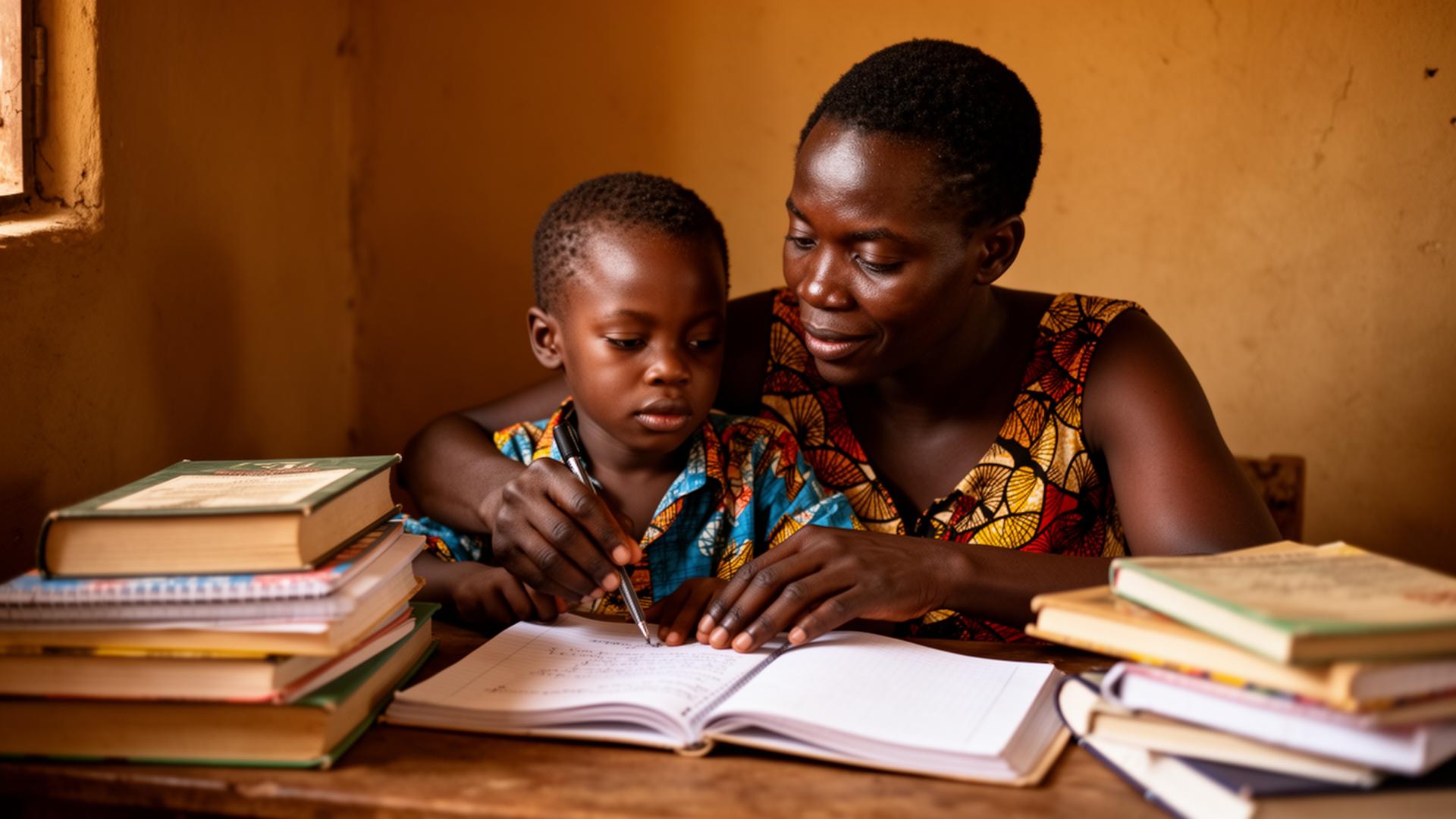
How to identify, nurture, and appropriately challenge gifted children in African educational contexts — navigating school systems, enrichment options, and emotional wellbeing.
Giftedness is one of the most misunderstood areas of educational diversity. Gifted children are simultaneously among the most fortunate — with natural cognitive advantages — and among the most underserved, in educational systems not designed for their needs. In African contexts, this underservice is particularly acute: formal gifted education programmes are rare, identification is inconsistent, and cultural attitudes toward exceptional children range from pride to anxiety to superstition. This guide helps African parents navigate this complex terrain practically and compassionately.
5–10%Of children in any population are estimated to be gifted Boredom#1 classroom experience of unchallenged gifted children 2xHigher dropout risk for unchallenged gifted children vs average SA, Kenya, EgyptAfrican countries with most developed gifted education provisionWhat Giftedness Is and Isn't
Gifted children are not simply "fast learners" or "well-behaved academics." Giftedness encompasses exceptional reasoning ability, intense curiosity, rapid acquisition of concepts, advanced vocabulary, unusual creativity, heightened sensitivity, and sometimes asynchronous development — being academically years ahead of age-peers while emotionally and socially age-appropriate. Some gifted children underperform in school — they are "twice exceptional," with both gifts and specific learning differences (dyslexia, ADHD) that schools fail to identify. Unchallenged gifted children frequently become disruptive, anxious, or disengaged — not because they are difficult, but because they are profoundly under-stimulated.
Identification in African Contexts
Formal gifted identification — standardised IQ testing, psychoeducational assessments — is available in South Africa, Kenya, Egypt, and a small number of urban centres elsewhere, but is inaccessible to most African families. Informal identification relies on parental observation and teacher recognition. Signs to look for:
- Learns concepts significantly faster than same-age peers
- Asks unusually complex or sophisticated questions
- Has an extensive vocabulary for their age
- Reads independently and voraciously from an early age
- Shows intense, persistent interest in particular topics
- Shows emotional intensity — deep empathy, strong reactions, perfectionism
- Becomes bored and sometimes disruptive in age-appropriate classroom settings
Navigating the School System
Communicating with Teachers
Approach teacher communication as partnership rather than advocacy conflict. Share observations specifically and constructively: "Amara finishes class work within 10 minutes and then becomes disruptive — could she be given extension tasks?" is more productive than "My child is gifted and is being held back." Most teachers respond positively to parents who come with specific, solvable problems rather than diagnoses.
Enrichment Over Grade Acceleration
Where grade skipping is not available or appropriate, enrichment is the primary tool: deeper, more complex work within the same grade. Science competitions, mathematics olympiads, debating clubs, and independent research projects all provide challenge. Kenya's National Science Congress, South Africa's Science Olympiad, and Nigeria's Mathematics Olympiad are examples of established enrichment pathways available to outstanding students across income levels.
Home Enrichment
Parents can do a great deal without relying on schools:
- Advanced content platforms: Khan Academy's advanced courses, MIT OpenCourseWare, Coursera provide genuinely challenging material for anyone with internet access.
- Deep interest nurturing: If your child is fascinated by astronomy, code, or medieval history — go deep. Books, documentaries, mentors, local clubs. Deep expertise compounds.
- Peer connection: Finding intellectual peers is important for gifted children who may feel socially isolated from age-matched classmates. Online communities, mathematics camps, science clubs provide this connection.
- Emotional support: Gifted children often experience emotional intensity that is difficult to navigate. Validate their feelings, take their intellectual concerns seriously, and watch for perfectionism-related anxiety.
Virtual Schooling for Gifted Learners
Virtual schooling can be particularly well-suited to gifted children in some circumstances. The ability to work at one's own pace — moving faster through mastered material, going deeper on areas of interest — is a genuine advantage. Gifted children who find the social dynamics of conventional classrooms difficult (peer teasing about academic engagement, boredom-driven behaviour issues) may thrive in the different social environment of virtual school. Schools like Sunrise Virtual School can accommodate more individualised pacing than large physical classrooms typically allow. Contact: sunrisevirtualschool.com | +254 704 007 008
Conclusion
Supporting a gifted child in Africa requires creativity, advocacy, and patience with systems not designed for their needs. The goal is not a perfectly optimised academic machine — it is a fulfilled, resilient, connected human being whose gifts serve both them and their community. That is both harder and more important than maximising examination scores. Parents who approach it with that understanding will navigate it better than those who see giftedness purely as an achievement to be managed.