
The Price of Exclusion: How Education Costs Keep 98 Million African Children Out of Class
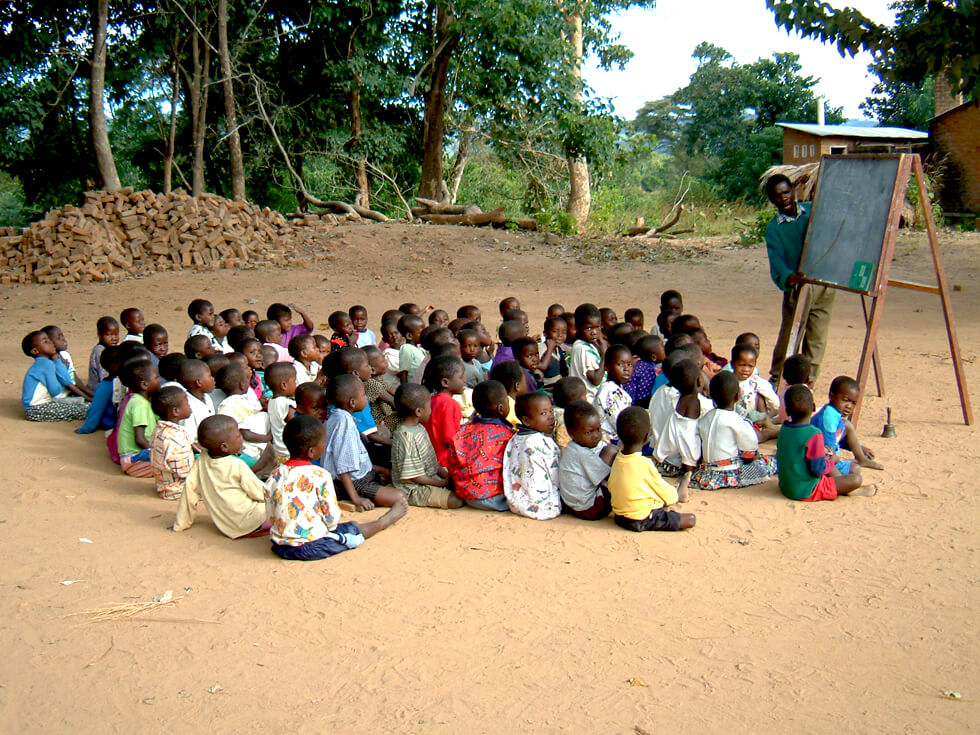
High education costs and systemic barriers exclude 98 million African children from classrooms, creating a development emergency that traditional schooling models are financially unable to solve.
The Price of Exclusion: How Education Costs Keep 98 Million African Children Out of Class
By Eng. Ben Kairu | Entrepreneur · Author · Strategist
Chief Executive Officer, Sunrise Virtual School
Published on Africa Education Review | africaeducationreview.com
Africa is not failing for lack of ambition. It is failing, in significant part, because 98 million of its children cannot get into a classroom — not for lack of will, but for lack of money. That number, drawn from UNESCO data, is not a footnote. It is the defining statistic of the continent's development challenge, and it deserves to be treated as such.
The African Union declared 2024 the Year of Education. The declaration was right. But declarations do not build schools, train teachers, or put devices in the hands of learners who have never owned one. What will move this crisis is an honest accounting of why it exists — and a willingness to act on what that accounting reveals.
This article is that accounting. It examines the cost structures that make education inaccessible for millions of African families, the cascading consequences of that exclusion, and why the traditional model of schooling is structurally incapable of solving the problem it helped create.
A Crisis of Affordability, Not Aspiration
African families want education for their children. The evidence for this is in the sacrifices they make to obtain it. In low-income African countries, household contributions account for nearly 40% of total education spending — a burden borne by families who are also spending the majority of their income on food. In many contexts, direct education fees alone consume 25% of family income. When transportation, uniforms, textbooks, examination fees, and meals are added, the total cost frequently exceeds what poor families can sustain.
The consequence is predictable and devastating. When a family in rural Niger or eastern DRC must choose between feeding children and schooling them, feeding wins. When the cost of transport to the nearest school exceeds a daily wage, children stay home. When a girl's safety cannot be guaranteed on a five-kilometre walk, she does not make the walk. These are not failures of parental love or ambition. They are rational responses to impossible economic conditions.
The barriers compound each other in ways that make the aggregate burden far heavier than any single cost. Direct fees — school fees, textbook costs, examination registration, uniform requirements — are visible and often the focus of policy debate. But indirect costs frequently exceed them. Transportation in rural areas can cost more than tuition. Boarding fees for children who cannot commute daily transform secondary education into a luxury that most families cannot afford. And the opportunity cost of a child's labour — the farming, trading, and domestic work that poor families depend on — means that even a free school represents a cost when the child is needed at home.
Beyond household costs, there are systemic failures that multiply the problem. African governments, operating under significant fiscal constraints, consistently miss education funding targets. The consequences are physical: too few schools, overcrowded classrooms, teacher shortages, and facilities that lack the basic infrastructure — libraries, laboratories, reliable electricity — needed to deliver a meaningful education. Sub-Saharan Africa faces a shortage of 15 million qualified teachers. Many existing teachers lack adequate training. Classroom ratios routinely exceed 70 students per teacher, and in some schools reach 1:200.
Who Bears the Heaviest Burden
The distribution of educational exclusion is not random. It follows the lines of existing disadvantage with brutal consistency.
Rural children are 1.5 times more likely to be out of school than urban children. The logic is straightforward: schools are fewer, farther apart, less well-equipped, and harder to staff. The combination of distance, cost, and quality deficit creates a compounding disadvantage that rural families have limited capacity to overcome.
Girls face a distinct and particularly consequential set of barriers. Safety concerns on long commutes, cultural norms around female education, early marriage expectations, and household responsibilities that fall disproportionately on daughters all push girls out of school. The exclusion is not merely unfair — it is economically catastrophic. Educating girls is among the highest-return development interventions known. Each additional year of schooling for a girl is associated with lower fertility rates, better child health outcomes, and higher household incomes. The exclusion of girls from education does not just affect the girls themselves; it ripples through families and communities for generations.
Children affected by conflict and displacement face the most acute exclusion. Over 16 million children across sub-Saharan Africa have been forcibly displaced from their homes, severing their educational continuity. For these children, the barriers are not primarily financial — they are existential. Education requires stability, and displacement destroys it. The digital models examined later in this article are particularly relevant for displaced populations, who cannot wait for physical infrastructure to be rebuilt before their education resumes.
Children with disabilities face a system that was not designed with them in mind. Physical school infrastructure is often inaccessible. Teaching methods rarely accommodate different learning needs. And the attitudinal barriers — from educators, administrators, and communities — are as significant as the physical ones.
The Mathematics of an Unsustainable Model
Understanding why the traditional schooling model cannot solve this crisis requires looking at its economics with clear eyes.
Building and operating a single physical school for 400 students costs approximately $1.14 million in the first year — a figure that includes $550,000 in capital investment for land, construction, and initial equipment, plus $442,600 in direct operational costs covering teacher salaries, administrative staff, utilities, and learning materials, plus indirect costs including household contributions, community infrastructure strain, security, and asset depreciation. The per-student cost in year one approaches $2,845.
These costs do not diminish significantly in subsequent years. Teacher salaries must be paid continuously. Buildings must be maintained. Equipment must be replaced. And as enrolment pressure grows, schools built for 400 students end up serving 1,000 to 1,200 — not through innovation, but through the desperate expedient of overcrowding. This "economy of scale" achieves lower per-student costs only by severely degrading the quality of education each student receives.
To achieve universal primary education across Africa using this model, Sub-Saharan Africa would need to build approximately 9 million new classrooms by 2030. The capital requirement is financially and logistically beyond what current funding frameworks can deliver.
The Consequences That Extend Far Beyond Education
The exclusion of 98 million learners from education is not merely an educational problem. It is a development emergency with consequences that extend across every dimension of African social and economic life.
The economic costs are quantifiable and staggering. Each additional year of average schooling raises long-term GDP growth by approximately 0.37 percentage points. A population without adequate education produces workers with lower productivity, economies with weaker innovation, governments with a reduced tax base, and societies with diminished capacity to address their own challenges. UNESCO estimates the global economic cost of educational gaps at $10 trillion annually in lost potential. Africa bears a disproportionate share of that cost.
The social stability implications are equally serious. Widespread educational exclusion creates large cohorts of young people with no productive pathway and no stake in the existing social order. Youth unemployment, already high across much of the continent, is directly correlated with the educational exclusion that preceded it. Regions with the highest concentrations of out-of-school children consistently overlap with regions experiencing the highest rates of conflict and instability. Education does not guarantee peace, but its absence reliably generates conditions in which conflict becomes more likely.
Health consequences are direct and measurable. Maternal education is among the most powerful determinants of child health outcomes: each additional year of schooling for a mother reduces under-five child mortality by up to 10%. An uneducated population is a less healthy population — not because of any necessary connection between learning and health, but because education builds the health literacy, decision-making capacity, and economic resources that health requires.
The governance implications complete the picture. Democratic institutions require an educated citizenry — people who understand how systems work, can evaluate competing claims, and have the confidence and knowledge to participate in public life. Educational exclusion produces low civic participation, weak accountability, and governance structures that are more vulnerable to corruption and manipulation. A continent where millions are denied learning is a continent where institutional quality suffers as a result.
Why International Aid Has Not Solved It
Africa's education crisis has attracted significant international attention and funding for decades. The gap between what that investment has produced and what the scale of the problem requires demands an honest explanation.
The fundamental problem is that international development assistance has largely funded the replication of a model that is structurally incapable of achieving the scale required. Donor funding has built schools, trained teachers, and developed curricula. These investments have not been without value. But international development assistance for education is projected to drop by more than a quarter by 2027, creating a precarious funding cliff for programmes dependent on external aid. And even at its peak, donor funding was never large enough to build and maintain the 9 million classrooms that demographic growth demands.
A second problem is that aid has frequently reinforced dependency rather than building the sustainable domestic systems that would continue to function without external support. Education systems built on donor funding rather than domestic revenue are fragile. When the funding environment changes — as it is doing now — the systems it supported are exposed.
The conclusion is uncomfortable but unavoidable: the traditional model, even generously funded, cannot scale fast enough to serve Africa's growing young population. A different approach is needed — not as a supplement to the existing model, but as a structural alternative to it.
The Structural Alternative
The cost barrier that makes traditional schooling inaccessible to millions of African families is not inherent to education. It is inherent to a specific delivery model — one that requires land, construction, maintenance, large permanent workforces, physical materials, and transportation ecosystems. Remove the delivery model, and the cost structure transforms.
Digital-first education models, when properly designed and adequately supported by connectivity and device infrastructure, reduce delivery costs by 80 to 95% compared to traditional schooling. The comparison is stark: reaching one million learners traditionally requires 2,500 new schools, an upfront capital investment of $1.25 billion, and the recruitment of 25,000 new teachers. A well-designed virtual school platform achieves the same reach with an initial investment of $2 million and 2,000 teachers — over 600 times less capital, deployed in three to five years rather than seven or more.
This is not a theoretical comparison. It is the economic reality that organisations building digital education platforms at scale are demonstrating in practice. The per-learner cost in a digital model runs between $100 and $400 annually, compared with $700 to $1,200 in traditional schooling. For families where education costs currently consume 25 to 40% of household income, this reduction is transformative — the difference between education being accessible and it being out of reach.
What Must Change
The price of educational exclusion — in lost human potential, in foregone economic growth, in preventable suffering — is incalculable. The 98 million children currently out of school are not a statistic. They are individuals whose lives will be defined, in significant part, by whether the adults and institutions around them choose to act with the urgency this crisis demands.
Three changes are essential.
Governments must recognise that the digital model is not a future aspiration — it is a current necessity. Policy frameworks, regulatory environments, and funding allocations must be redesigned to enable digital education at scale, including investment in the connectivity and device access that digital learning requires.
International partners must shift their funding from physical infrastructure to virtual infrastructure. Every dollar spent on a classroom that reaches 40 students could, through digital platforms, reach 400. The return on investment for virtual infrastructure, measured in learners served per dollar, is categorically superior.
The private sector must treat educational access as an investment opportunity, not a charity case. The market for affordable, quality education in Africa is enormous. The businesses that build it well — with genuine attention to the constraints African families face — will build durable competitive advantages while generating genuine development impact.
Africa cannot transform while 98 million of its children wait outside the classroom. The cost of inaction is not abstract. It is measured in the lives of those children, and in the continent they will inherit.
Eng. Ben Kairu is an entrepreneur, author, and strategist. He is the Chief Executive Officer of Sunrise Virtual School, a leading virtual school operating in over 40 countries, serving students across diverse curricula and time zones.